
St. Anselm’s “Proslogion”

One of the most digestible, yet enthralling Medieval philosopher-theologians is St. Anselm, author of the Proslogian. Originally titled Faith Seeking Understanding, the treatise seeks to actively engage with God in a manner that both respects the vastness of His power and attempts to begin to internalize Truth in a rational way.

The objective of the Proslogian is singular: demonstrate a philosophical proof for the existence of God. Anselm’s reasoning goes something like this –

Imagine, in your mind, “that which nothing greater can exist.” Now, this imaginative concept is real, in the same way an architect can imagine the layout of a house before she builds it, but it is not real in the same way the house is.

So we can say that “that which nothing greater can exist” exists in our understanding.

But, we can think of something greater than that.

How about, “that which nothing greater can exist, that actually exists?”, that is to say, the architect’s actual house?

Since the concept of an unsurpassable greatness exists, then it follows that an unsurpassable greatness would exist outside of a mere concept, since it is, by its definition, supremely great.

Anselm, in later chapters, expands upon this argument, claiming that, since God is so powerful, God is actually “something greater than can be thought.” This distinction is crucial for understanding Anselm’s relationship to Truth. Anselm, in trying to understand his faith, does not make the critical error of having claimed to understand God. Anselm admits that the human mind is incapable of such a feat. In his humility, Anselm spends a whole chapter (16 in my edition) praising God for His supreme power and “unapproachable light.”

My hope is that this simple blog post has assisted your understanding of Anselm’s proof and perhaps even aided your understanding of your personal relationship with God. As we begin this new year, let us ask God for abundant blessings in our experiences in this world, knowing that each may point to Him if we only look at the world properly.

Good Saint Anselm,

You who sought to know your Father more abundantly, come, help us poor pilgrims in our wanderings upon this earth. Give us minds that seek to know without crossing the limits of what God has deemed appropriate. Help us to never stray far from You.

Amen.
Deliberate Sacrifice

If you look at the state of the Church today, you might be slightly disconcerted. With the sex-abuse scandals, clericalism, and divisiveness within the Church itself, it is easy to see why both Catholics and non-Catholics have a hard time understanding the Church’s direction in the foreseeable future. I am not an expert in Church history. I am not a theologian. I do not claim to have all the answers or unique insight into what the Church must do to get back on track.

I know this: one small step each person can take to help restore the Church is a deliberate sacrifice. In this post-modern world, everybody has a common goal, whether spoken or unspoken, to get what they want. Companies are continually pushing the newest phone, the shiniest car, and the trendiest clothes. In an age where you can get what you want when you want it, it is essential to remember that the material world will always leave you wanting more. When you grow accustomed to getting what you want more often than not, you start to get agitated at the slightest things that don’t go your way. I am as guilty of this as anyone. I have grown up extraordinarily blessed and never wanting for anything. I want to make it clear that I do not take that for granted. If you take nothing else away, this article’s point is that you have to voluntarily give up things to strengthen your will and prepare yourself for something you cannot or do not foresee.

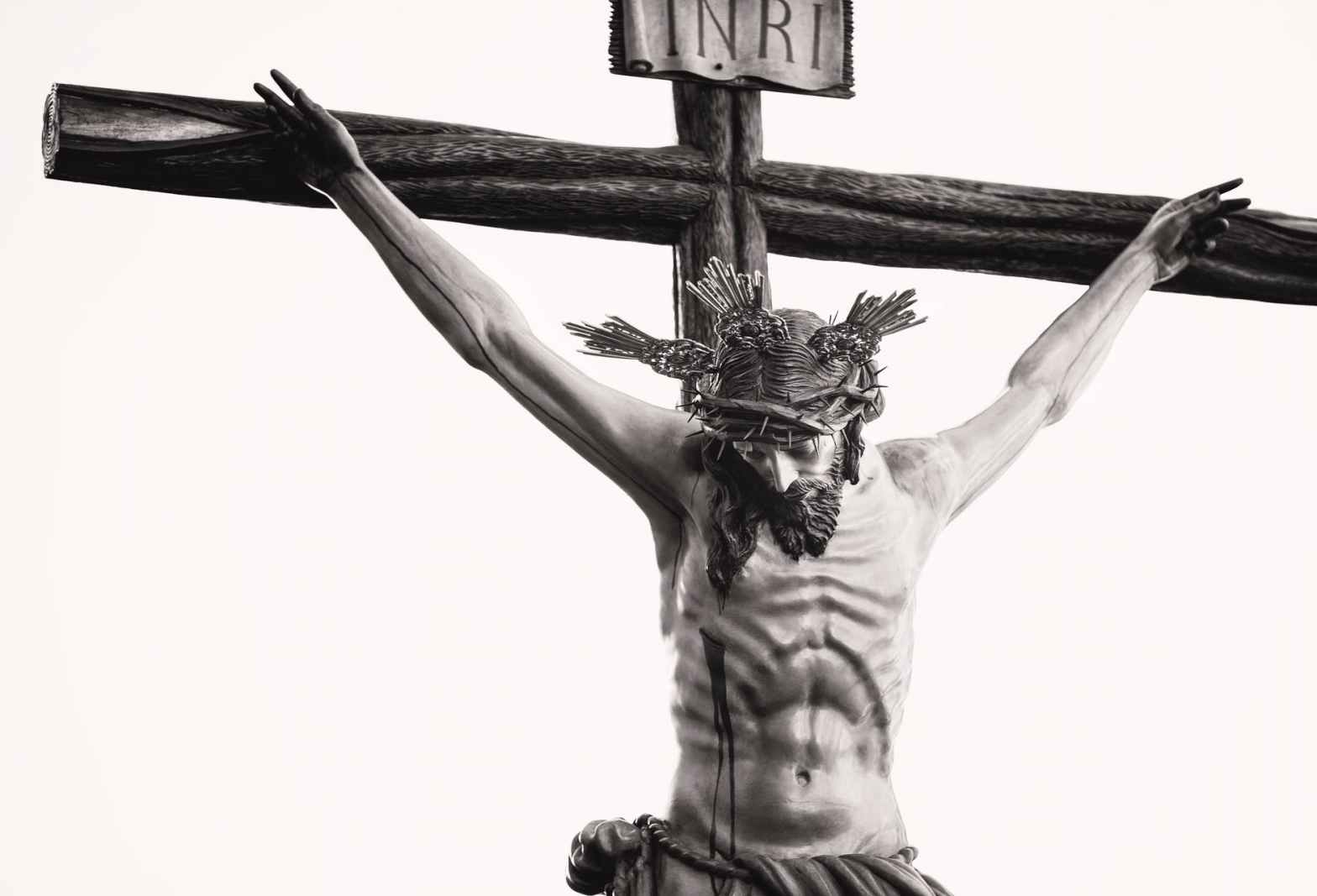
As Catholics, we should not be feasting all the time. Sunday is the day that was set aside for rest. Sunday is the day to feast. The rest of the week, especially Friday, should be devoted to penance. Jesus died on a Friday. He gave up His flesh for you on Friday, so too must you also give up flesh on Friday as a sign of reverence for the incredible sacrifice of Jesus Christ. As Christians, we are called to take up our cross and deny ourselves.

One way to ensure that we are not becoming lackadaisical or lukewarm in our faith is to commit to making a deliberate sacrifice. This sacrifice may look like eating less than you want to or not always eating your favorite foods. It may mean giving up your morning coffee. It may mean getting less sleep or taking cold showers. It will look different from person to person, but we must voluntarily give up things that are lawful to us so that our will is stronger against unlawful things. By denying yourself in small ways, you are actively saying no to comfortable things. If you can say no to lawful things such as food, drink, and sleep, then you will be more capable of saying no to something unlawful like sin.

“Then Jesus told his disciples, ‘If any man would come after me, let him deny himself and take up his cross and follow me. For whoever would save his life will lose it, and whoever loses his life for my sake will find it. For what will it profit a man, if he gains the whole world and forfeits his life?'”

Matthew 16: 24-26 RSV

Prepare Your Heart

I want to start this post by invoking the Holy Ghost to speak through me in the words written here to reach whoever needs to hear this. I have been trying to write for the past couple of weeks, but I haven’t had any inspiration to set me off on the path. Tonight, however, the Lord has put it on my heart to write this post. I am not entirely sure where it will go, but I trust that the Holy Ghost will guide me to write what needs to be written. I have faith that whoever reads this will comprehend what needs to be heard.


Come, Holy Ghost.


As we draw closer to Christmas, it is necessary to prepare our hearts, minds, and souls for the birth of Jesus Christ. I know it seems like it may be too late to prepare yourself for the coming of the Christ child, but rest assured the Savior of the world is waiting for you to invite Him into your heart. You may feel like you’re too far gone. You may feel like you’re unqualified to be loved by God. You may feel like there is no hope. And if you’ve been reflecting on this past year, you may very well feel like everything as you know it is crumbling to pieces.


But there is good news. You are not too far gone. You are not unfit to be loved by the One who made you. You are not worthless; you are precious.* You are not left out; you are wanted. Love has spoken. Let Jesus love you. It seems cheesy, but it’s much harder than it sounds. Giving away the fragility of your heart to someone else is no easy task. Let Jesus meet you where you are. Put down your guard. Make a commitment to have faith. Let the love of Christ pierce your inmost being this Christmas. Getting gifts on Christmas is nice and makes for fond memories. But have you ever thought about what gift you can give Jesus? Have you ever considered that what you are called to give this Christmas is the gift of yourself to the One who gave up everything for you?

“And not only that, but we also boast in our sufferings, knowing that suffering produces endurance, and endurance produces character, and character produces hope, and hope does not disappoint us, because God’s love has been poured into our hearts through the Holy Spirit that has been given to us.”

Romans 5:3-5 RSV

Prayer

“O Emmanuel, our King and Giver of Law:
come to save us, Lord our God!”

*Some phrases adapted from the song “Chosen” by Sidewalk Prophets

Narnia and Lord of the Rings on ‘being Dangerous’

“Perhaps he also thought you were Saruman,’ said Gimli. ‘But you speak of him as if he was a friend. I thought Fangorn was dangerous.’

‘Dangerous!’ cried Gandalf. ‘And so am I, very dangerous: more dangerous than anything you will ever meet, unless you are brought alive before the seat of the Dark Lord.’”

“Aslan is a lion- the Lion, the great Lion.” “Ooh” said Susan. “I’d thought he was a man. Is he-quite safe? I shall feel rather nervous about meeting a lion”…”Safe?” said Mr Beaver …”Who said anything about safe? ‘Course he isn’t safe. But he’s good. He’s the King, I tell you.”

Both the above quotations (the former from Tolkien’s The Two Towers and the latter from Lewis’ The Lion, the Witch, and the Wardrobe) speak to the nature of being, namely, that both the virtuous and vicious are dangerous. Both Gandalf, wizard-guide presiding over the quest of the Ring, and Aslan, Christ of Narnia, are terrible in power and capacity to protect those they look after. Yet those who are under the power of such beings are often unaware of the power their protectors’ possess.

The postmodern mind argues that the virtuous is the tame. And indeed, I think this is true, in some capacity. Within The Lord of the Rings, for example, the hobbits, in their relative smallness, are the only beings capable of delivering the Ring to Mount Doom, on account of their immunity to corruptibility. Gandalf himself, when confronted with the possibility of doing the deed himself, is overcome with dread at what may become of him for doing such a thing.

And I think of great saints who have achieved similar feats (coming to mind immediately is Thérèse of Lisieux) out of a sort of tamne-ness, or even the writings of Paul, who claimed “my power is made perfect in weakness” (2 Cor. 12:9). This is the genius of salvation: that we all have a unique manner in which we are perfectly ourselves. And it is vital to note that one is not better than another: though Frodo was the only one who could bear the Ring, he would not have made it to Mordor without Gandalf.

But what is concerning is when we assume that the way of tame-ness is the only manner of practicing one’s vocation, as is evident from today’s quotes. We associate danger and power with evil, thinking that strength always leads to corruption. Worse, we deny our own strength, thinking ourselves to be helpless in the presence of evil.

Safety, danger; we use these words to describe how we feel. We desire safety, fear danger. We reckon those outside of us as dangerous and downplay our own ability to be dangerous ourselves.

But we are not docile creatures. We are created in the image and likeness of God (a phrase used so often but understood so little). Our capacity for good and evil are beyond what we could possibly imagine. And as we increase in virtue (and fulfill our vocation) we increase in our capacity to act, for better or for worse. 

Think of the following analogy: kids can do some awful things, but it is adults that commit the most heinous of crimes. And while children have done some remarkable things, adults alone have the capacity to really carry out lasting meaningful change.

As we ask God to bestow upon us the graces to make His Kingdom come on Earth, we pray that we may be gifted with both the capacity to enact these changes and the childlike wonder required to dream such dreams:

Lord God, make of us a people who seek your Kingdom as a child searches for her mother. Remind us that you are always near and help us to hear your sweet, soothing voice. Give us the arms and legs to enact change, that we may put into action that which you inspire within us.

Through Christ Our Lord,

Amen.

Reflection on Sunday’s Reading (12/13/20)

“Do not quench the Spirit.”

(1 Thessalonians 5:19)

Oftentimes, when captivated, our minds press us forward, leading us as though under a trance. Something encourages us to act and we respond without hesitation.

But then, we stop. Our mind orders us that our current movement is but mere folly, that we are acting rashly. We feel ashamed to have even imagined acting under such inspiration. We ignore our captivation – perhaps onset by the heroic act of another – and convince ourselves that we are no such person.

A few years back, a copy of the devotional book, Jesus Calling came into my possession. A letter enclosed within its pages related that the book had been gifted to many hands, all with the intention of presenting the receiver with a grace to increase one’s faith. For each receiver, the inspiration of having been gifted with such kind intention served as a means for passing the gift on to another. The overwhelming sense of gratitude one feels when confronted with such loving favor effectively influences the self to perform an act of beneficence for another.

When I heard the phrase from First Thessalonians that I opened today’s reflection with, I found myself intrigued by what the line might mean. How is the Spirit quenched, and how is that something we can do?

Perhaps Paul was referring to those moments in which we deny our tendency to become overwhelmed with gratitude and pass forward that which we have been gifted. The most special gifts to recieve tend to be those that are unexpected and different; they have a sort of intangible value associated with them. Receiving the book from my friend was unanticipated and reading the letter even left me feeling a bit strange. It was almost difficult for me to process such a charitable act and the vulnerability required to perform such an act made me appreciative for her friendship.

The book was sent under the blaze of the Spirit, an act of God that sweeps the individual over with loving-kindness and influences him to do wonderous things in God’s name. And when we are the recipient of such graces, it is not our part to stand idle. Rather, we are called to be moved by the same spirit, to give to another that which was given to us. To refuse this, to greedily latch on the gift given us is to fail to be authentically grateful.

Being grateful is to be transported out of our small selves into something greater, to act, under God, in a manner that is generative and benevolent. To quench the Spirit is to throw aside such gratitude, to act out of avarice, seeking to possess things rather than receive them properly. Let us pray to God that we may be moved by His Spirit in a manner that is proper:

God of Inspiration,

Loosen our clenched fists and soothe our troubled minds

Help us to let go of possessiveness 

Open our eyes to Your Spirit and encircle us in Your mission

Allow our beings to be swept up with Your grace and to move along with You

Give us hearts that will trust Your work, feet to keep your pace, and mouths to smile along in Your joy

Amen.

Gandalf on Refusing Your Destination

“‘You are right, Frodo,’ said Gandalf: ‘to go back is to admit defeat, and face worse defeat to come.”

(Gandalf, The Fellowship of the Ring)

Whenever we set out to accomplish something, the temptation to mediocrity is quick to knock upon our doors and push us in the direction away from our necessary destination.

St. Augustine likens our lives to a weight, and by his reckoning, our weight carries us on our journey towards God, until we ultimately rest in the Divine love. To Augustine, the objective of our existence is to arrive at a relationship with our Creator.

Though leaving the comfort of our current being is always the most difficult movement, the fortitude required to maintain our trajectory is another virtue we must ask for. Turning back toward where we came seems to present itself as the logical course of action, but we must fix our sights upon our destination. What’s more, is that returning to our origin damages us more than whatever danger we imagine laying on the road ahead of us.

What happens when we deny the destination that God has carved out for us and linger in mediocrity? Jonah is swallowed up by the fish, the rich young man leaves Christ empty-handed, and Peter is left to despair at having denied knowing his Lord. When we refuse the path we have embarked upon, we cannot hope but to welcome suffering.

Why is this our lot? For one, we ought to strive to complete that which we have set out upon. We ought to approach the world with a gratitude mindset, and when we cast aside our natural abilities and competencies, we are effectively saying, “these gifts aren’t valuable to me.” Rejecting our propensity to glory is harmful also because it is a rejection of a prior commitment we ourselves made. Resolving towards a goal and failing to achieve it, not because of our own inadequacy or powerlessness, but because we ourselves failed to even try, is forsaking both our Creator and our selves.

I think this is what Gandalf means when he says, “and face worse defeat to come.” Indeed, in some base sense, Gandalf is referring to the consequences of inaction. When we fail to act, that which we are striving against will prevail against us. But in a deeper sense, when we turn our backs on our calling, we have to live with having made such a decision. Abandoning our future success in order to receive temporary comfort is a recipe for disappointment in the self. The mind is crafted to reward valiant effort, but when we fail to even try, we will naturally grow frustrated with our inaction. Encountering a self that is wounded not because of external circumstance, but because it never even attempted to know those circumstances, is to know the despair of Jonah and Peter.

And so as Gandalf replies to Frodo, we too must be vigilant in keeping our own journeys. Knowing that refusing the opportunities we have been given will lead us to mediocrity, we pray that God may counsel us:

God, armor of courage,

Inspire us today to aim for a proper relationship with You,

Instruct us with your wisdom. Teach us which journeys are fruitful and need committing to, and which are folly and need forgetting.

Embed within us a zeal to journey towards you, in fellowship with others.

Amen.

Leaving the Ninety-Nine

Matthew 18:12-14 NABRE

 “If a man has a hundred sheep and one of them goes astray, will he not leave the ninety-nine in the hills and go in search of the stray? And if he finds it, amen, I say to you, he rejoices more over it than over the ninety-nine that did not stray.  In just the same way, it is not the will of your heavenly Father that one of these little ones be lost.”

Matthew 9:11-13 NABRE

“The Pharisees saw this and said to his disciples, ‘Why does your teacher eat with tax collectors and sinners?‘ He heard this and said, ‘Those who are well do not need a physician, but the sick do. Go and learn the meaning of the words, ‘I desire mercy, not sacrifice. I did not come to call the righteous but sinners.'”

Jesus did not come for the righteous, He came to save sinners. Jesus is the Divine Physician and we need His healing. He is the Good Shepherd. He leaves the ninety-nine to find the one that strayed.

I have a tendency to get upset or frustrated when I feel distant from God. It is not always a bad thing to feel distant from God. Sure, it’s not a great feeling. Although it’s not a great feeling, it can be incredibly fruitful if we take advantage of the opportunity God has given to us. He allows you to undergo temptation and trials to strengthen you. I do not mean to insinuate that God is not everywhere or that God is too busy. God is everywhere and He is never too busy for you.

What I mean is that feeling distant or lonely does not mean that you are not loved and cared for by the One who created you. God loves you so much and knows you better than you know yourself. He knows that you can undergo trials because of your faith in Him and because He will shower you with the grace you need to persevere. That does not mean it will be easy. Sometimes you will feel like your world is falling apart. Sometimes you will feel that you can’t push on any further. Sometimes you will feel completely overwhelmed that you seem to be paralyzed. Don’t be afraid of these feelings.

It is OK to feel this way. It is OK to struggle. The most important thing is to run to the Father. Only He can fulfill you. Only He can sustain you. Only He can give you what you need to persevere to the end.

Take, Lord, and receive all my liberty,
My memory, my understanding
And my entire will,
All I have and call my own.

You have given all to me.
To you, Lord, I return it.

Everything is yours; do with it what you will.
Give me only your love and your grace.
That is enough for me.

Amen.

Prayer of St. Ignatius of Loyola

The Value of Trials and Tribulations

I have a tendency to think that because I believe I am following God’s Will for my life that my life will be made easier. Somehow I have come to the conclusion in my head that following where God leads is going to lead to less stress, fewer problems, more happiness, and great success. 

That is just not the case. I think the opposite is true far more often. Following God’s Will does not mean less stress and an overall easier life. When I read through the lives of the saints, I normally don’t sit back and think to myself “Wow! That seems so easy and fun.” 

It is generally acknowledged that the wicked seem to prosper while the upright and just seem to suffer. We also tend to wonder just why that is. I don’t have all the answers but I think a possibility could be that our trials and tribulations sanctify us. God uses the struggles we encounter to work for His benefit. 

Suffering is not always bad. We need suffering to humble us. We need to be reminded that without God we don’t and can’t have it all together. The wicked seem to prosper here on earth while the righteous suffer. This is often viewed as unfair. But I propose that this is not unfair at all. Rather, this is beneficial for our sanctification and should be embraced. 

God does not promise that the path will be easy, however, He does promise that He will never leave us or forsake us. Allow Him to use your trials, your uncertainty, and your fear to sanctify you. Surrender to Him and allow His abundant grace and mercy to overwhelm you. 

Verses to Ponder

  • James 1:2-4
    • “Consider it all joy, my brothers, when you encounter various trials, for you know that the testing of your faith produces perseverance. And let perseverance be perfect, so that you may be perfect and complete, lacking in nothing.”
  • John 16:33
    • “‘I have told you this so that you might have peace in me. In the world you will have trouble, but take courage, I have conquered the world.’”
  • 2 Cor 12:9
    • “but he said to me, ‘My grace is sufficient for you, for power is made perfect in weakness.’ I will rather boast most gladly of my weaknesses, in order that the power of Christ may dwell with me”
  • Romans 8:38-39
    • “For I am convinced that neither death, nor life, nor angels, nor principalities, nor present things, nor future things, nor powers, nor height, nor depth, nor any other creature will be able to separate us from the love of God in Christ Jesus our Lord”

Be Still

“Come and see the works of the LORD, who has done fearsome deeds on earth; Who stops wars to the ends of the earth, breaks the bow, splinters the spear, and burns the shields with fire; “Be still and know that I am God! I am exalted among the nations, exalted on the earth.””

‭‭Psalms‬ ‭46:9-11‬ ‭NABRE‬‬

Take a breath. Exhale. Be still.

The injunction offered by God via the Psalmist in the above is advice that seems almost impossible to follow. How often, as children, are we instructed to ‘sit still!’ or ‘stay over there!’ by parents who sense our overzealousness? And how often, even today, do we find ourselves struggling through meetings, or classes, or other responsibilities, with the nagging sensation that we’d much rather be someplace else than we are at this moment, regretting the fact that we need ‘be still’?

It seems that our natural state is motion; to be always seeking after some end, or chasing after some endeavor. We are never satisfied with dawdling in a moment; no we must always direct our eyes after something new.

So why is it that God, the unmoved mover, the Father of motion, the Enactor of time and being would instruct us to simply, ‘be still?’

My first move was this: perhaps there is some utility in doing so. Perhaps when we are quiet and unmoving, we gain perspective, or we are re-energized. Maybe we have an opportunity to reflect, or to reconsider that paths we are currently treading upon.

And I think all of these are indeed real, good possibilities. But my mind doesn’t want to stop there.

Perhaps we are invited to ‘be still’ because there exists no utility in such a decision. It is rather an invitation to do something for the sake of doing so; practicing an action for its own end, not to achieve some ulterior motive. Because to ‘be still’ is not aimed at achieving some high and lofty purpose, but to simply enjoy a moment, to persist in existence for the sake that existence is good!

The very same God that has limitless potential, who enacts great deeds across the Earth, who knows the inner characters of all Creation – that God concurrently invites us to exist in a state of pure being! It is only when we are quiet that we are able to truly exist, when our lives are devoid of distractions and obstacles to joy. Because maybe pure joy is not a complicated formula of having the right level of income, or the perfect career or family, but maybe the purest form of joy we can experience is being beheld as Good in the eyes of the One who in Itself is Good, in other words, being still in God’s presence.

So Many Things

We fill up our lives with so much stuff that we lose sight of what is truly important. Stuff is not limited to merely material things. Stuff can be too many extracurriculars, spending too much time at work, TV, social media, and more.

Worrying about all of these things can be debilitating. Your patience grows thin. Being a Christian is very difficult. It becomes more difficult when you place yourself in situations where you can’t be who you are because there are so many things that are desperate for your attention.

“What consumes your mind, controls your life.” Worry consumes the mind and fear starts to take a hold on your life.

Jesus says it perfectly in the Gospel of Luke: “‘Martha, Martha, you are worried and distracted by many things; there is need of only one thing‘” (Luke 10:41-42).

We fill our lives with so many things. How often do we take the time to fill our lives with God?

Other verses to ponder:

Colossians 3:2 – “Mind the things that are above, not the things that are upon the earth.”

Matthew 6:33 – “Seek ye therefore first the kingdom of God, and his justice, and all these things shall be added unto you.”

Isaiah 41:10 – “Do not fear: I am with you; do not be anxious: I am your God. I will strengthen you, I will help you, I will uphold you with my victorious right hand.”